
 Bill Pickard, Assistant Curator of Archaeology at the Ohio Historical Society, will present a program in the Marion’s Heritage Hall auditorium covering the archaeological excavation currently being conducted at Pickawillany, an 18th century Miami Indian Village. The event is Thursday, February 23, at 7:00pm and is free and open to the public.
In 1747, during an internal conflict with the French, the Miami Indians moved from their principal town of Kekionga (Ft Wayne, Indiana) and settled at a place called Pickawillany, located near the junction of Loramie Creek and the Great Miami River. Presently this site is about three miles north of the town of Piqua in Miami County Ohio. In 1748, the Miami allowed the English to open a trading post there in opposition to the French who claimed as theirs all of the Ohio country north and west of the Ohio River.
Over the next four years Pickawillany prospered as an English trading center and the French began to view what was going on there as a direct threat to their sovereignty in the western Great lakes and North America in general. Despite their repeated protests the Miami remained formally attached to the English.
To settle the question once and for all the French attacked Pickawillany. They killed or captured most of the English traders and killed the Miami chief Memeskia, also known to the English as “Old Briton”. From that point forward Pickawillany ceased to exist.
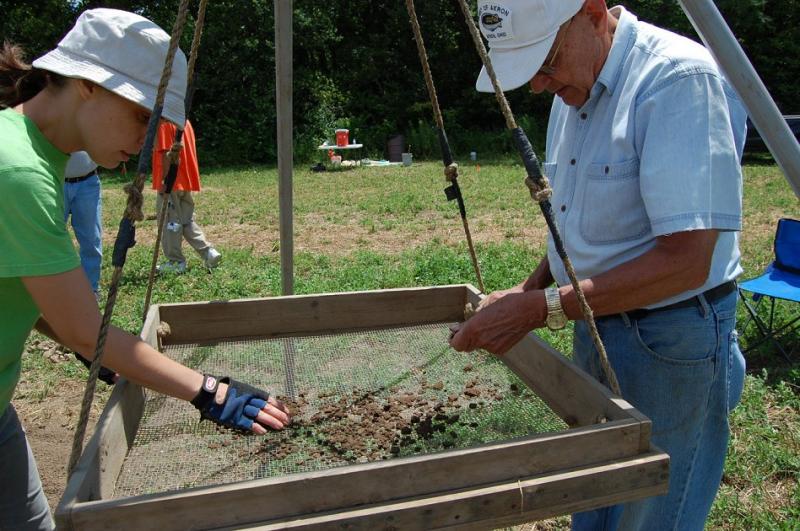
For the past ten years, OHS archaeologists have been conducting a comprehensive research program at the site using technologies new and old as well as searching period journals and other writings to view the site from as many points of view as possible. It’s all part of an ongoing process to do archaeology properly in order to make sense of the place where written history in Ohio is said to have begun.
Pickard has been involved in archaeology for about 25 years and has been working at OHS in one capacity or another since about 1997. He has been employed or worked on projects for the Cleveland Museum of Natural History, the Buffalo Museum of Science and the National Park Service. Besides Pickawillany, Bill has been involved in projects at Ft Meigs and Ft Laurens and has also done archaeology at Fort Ancient, Serpent Mound, Flint Ridge and the mounds and earthworks in Newark, Ross County and Marietta. He was also involved in the excavation of the Burning Tree Mastodon in 1989 and the Chippewa Stag Moose in 2008. Mr. Pickard has worked on projects in Maine, New York, Kentucky, Illinois and Washington State.
After Bill Pickard’s presentation, Ed Schweinfurth of LaRue, a volunteer who helped with the Fort Morrow excavation conducted by the Ohio State University in the 1970’s, will share some of his experiences. Artifacts from Fort Morrow, currently held by the Marion County Historical Society, will be on display for this event.
Heritage Hall, the Marion County Historical Society headquarters, is located at 169 East Church Street. Doors open at 6:30 and the program begins promptly at 7:00 P.M. Plenty of parking is available behind the building. Parking lot access is off of South State Street just south of Church Street. This event is the first in a series of programs commemorating the Bicentennial of the War of 1812.
The photo is from a 2010 excavation at the site of Pickawillany.


